


What You Really Need to Do During the First Week of School in K–2

That First Week Feeling
The floors are shiny. Your bulletin boards are perfect. You’ve spent hours cutting labels, laminating name tags, and color-coding every bin. Your classroom is finally beautiful - and you’re ready for that magical first week.
And then the kids come in.
Suddenly you’re answering 12 questions at once, helping a kid zip their backpack while another one is crying in the doorway, and your plan to review bathroom procedures and expectations before the first students needs to go? Not happening!
Also, your admin might be asking for lesson plans or pressuring you to “start curriculum right away.”
Let me tell you something clearly, especially if you’re a new teacher: The first week of school is not about curriculum. It’s about creating a calm, predictable environment where your students feel safe and know what to expect. I'm going to say that again, because I've been there with a pacing guide that wants us hitting the ground running but THE FIRST WEEK OF SCHOOL IS NOT ABOUT CURRICULUM. Now, the ideal way of starting the school year, and your admins requirements might conflict. Do everything you can to push back for at least a few days. If you spend your first week laying that foundation, everything else will go smoother. You've got to go slow to go fast, right?
So What Should You Actually Do the First Week?
Let’s break it down:
1. Teach Routines Like It’s Your Job (Because It Is)
Before you dive into teaching math or reading, you need to teach:
Morning arrival (what to do as soon as they walk in)
Carpet time (how we gather and listen)
Voice levels (what volume is appropriate when)
Partner or group work flow
Independent work time
Pack-up and dismissal
How we start and end each part of the day
These routines form your classroom’s predictable rhythm. They're what make the classroom feel safe and structured.
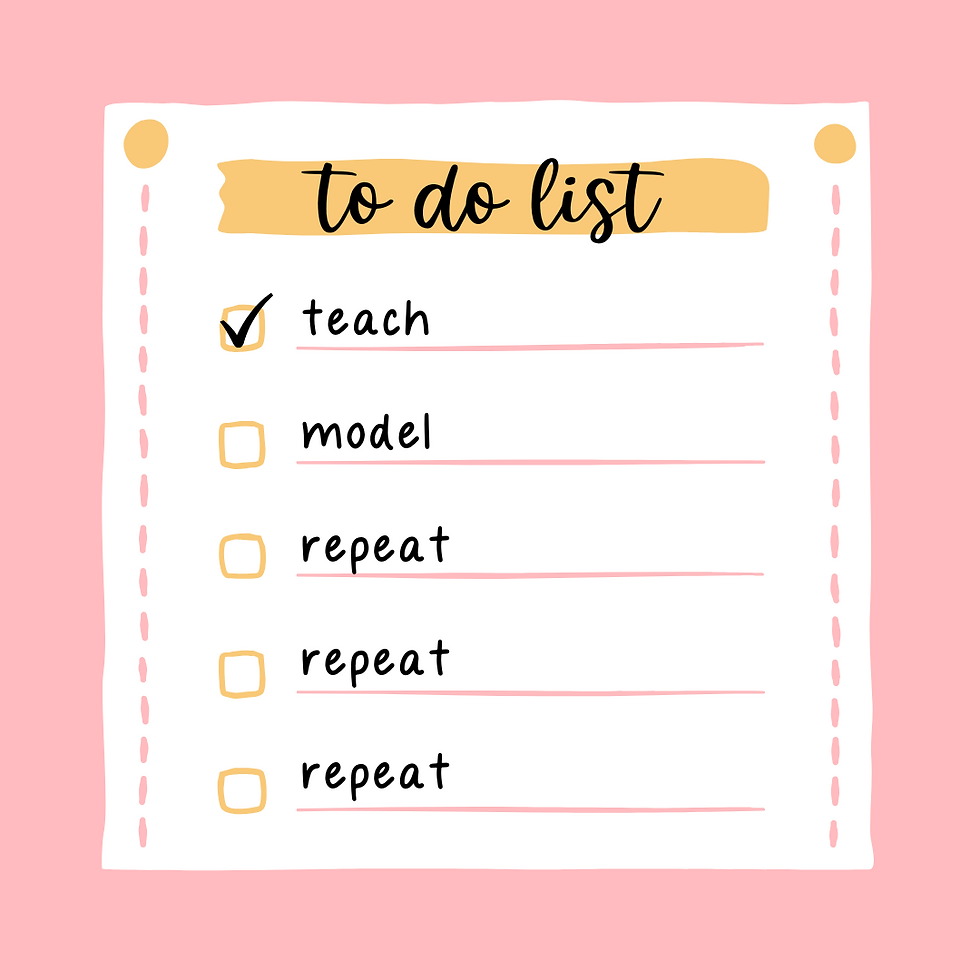
Pro Tip: Don’t assume anything. Model it. Practice it. Repeat it.
You’ll feel like a broken record, but that’s okay - that’s exactly what they need right now. If you think you have reviewed any routine or procedure too many times in those first weeks, I promise you, you have not.
Practice Procedures with Purpose - Step by Step Tasks
Kids need structure, and that structure is built through repetition. So practice:
How to unpack in the morning
How to get a pencil or sharpen one
How to ask for help or get the teacher’s attention
What to do when you need the bathroom or a drink
How to clean up supplies
How to walk in the hallway
How to line up and wait
How to sit at your desk or on the rug
How to transition from one activity to the next
How to use materials (crayons, scissors, glue, tech, etc.)
These are the ones you model and practice repeatedly with lots of visual and verbal reminders.
The goal: Turn every procedure into a practiced routine before academics take center stage.
Build Relationships (With Every Single Activity)
You don’t need fancy games to build connection (though those are great!).The how matters more than the what.
Ask lots of questions. Let students draw or talk about themselves. Listen carefully and call them by name - often.
Use activities like:
Morning meeting (even if it’s just a hello circle!)
Feelings check-ins
Share your own favorites (color, snack, book) during morning meeting
Use simple partner interviews
Let students draw or write about themselves
Circle back and reference what they shared - it shows you're listening
When students feel safe and seen, routines land faster and behavior improves. It’s all connected.
Read Aloud Often
If you’re not sure what to do next… read a book.
Books are powerful in the first week. They:
Set the tone
Create shared language
Offer natural ways to talk about emotions, routines, and expectations
Choose books that spark discussion about feelings, friendship, mistakes, and starting something new.

A few of my favs?
The Pigeon HAS to Go to School! by Mo Willems
Pigeon is not ready for school and has a whole list of hilarious reasons. A fun way to ease first-day nerves.
The Day You Begin by Jacqueline Woodson
A gentle and thoughtful book that helps students talk about feeling different and finding connection.
School’s First Day of School by Adam Rex
Told from the school’s point of view, this one helps kids reflect on their own feelings in a fun and unexpected way.
Decibella and the 6-Inch Voice by Julia Cook
Perfect for teaching voice levels. Kids really understand it, and you’ll come back to it all year long.
Mean Jean the Recess Queen by Alexis O’Neill
A rhyming favorite that opens up conversations about friendship, inclusion, and how we treat others on the playground.
Wordy Birdy by Tammi Sauer
Wordy Birdy talks a lot but doesn’t listen very well. This story helps kids understand why listening matters.
My Mouth Is a Volcano by Julia Cook
A great choice for those little blurters. It gives kids language and visuals to talk about interrupting and self-control.
All Are Welcome by Alexandra Penfold
Simple and reassuring, this book sets the tone that every student belongs in your classroom.
Keep Academics Light + Meaningful
Yes, you can sprinkle in academics just keep it light and flexible.
Label a picture = writing
Count how many letters in your name = math
Sort supplies = sorting, organizing, categorizing
Instead of starting the curriculum, focus on the skills they’ll need to access it later:
Listening to directions
Working independently
Sharing materials
Using tools and spaces responsibly
Give yourself permission to slow down. The “real” teaching is happening even when you’re not following a scripted lesson plan.
What You Can Let Go Of (For Now)
Let’s say it louder for the people in the back:
❌ Finishing every activity
❌ Starting curriculum on Day 1
❌ The “perfect” anchor chart
❌ Feeling like a bad teacher because you ran out of time (seriously, my whole first week in my plan book is always a mess of cross outs and arrows and notes on what to move where because the first days go by SO FAST!)
Instead, focus on:
✔️ Predictability
✔️ Routines
✔️ Relationships
✔️ Emotional safety
You’re building the foundation this week. Everything else will come.

Final Word
If your plan book looks messy, you didn’t get to half of what you wrote, and you’re still trying to remember everyone's name - you’re doing just fine.
The first week of school isn’t about perfect lessons. It’s about building the kind of classroom that makes those lessons possible.
Start with routines. Build connection. Make space for emotions. And give yourself the same grace you give your students.
You’ve got this.
And if you could use a little support?
I put together a Back to School Toolkit with the kind of checklists and simple first week activities I use every year. It’s not fancy, but it works and it saves me so much time during those first chaotic days. You can check it out by clicking the pic below.


Comments